French cooperative bank Crédit Mutuel Arkéa hit by sophisticated cyberattack leading to massive unauthorized fund transfers


Crédit Mutuel Arkéa, a prominent player in the French financial services landscape, has recently confirmed that it fell victim to a sophisticated cyberattack that resulted in the unauthorized transfer of a substantial sum of money. The incident, which has sent ripples through the European banking sector, saw hackers infiltrate the institution’s systems and leverage the bank’s own internal accounts to facilitate illicit transactions to external entities. While the exact figure remains a subject of ongoing investigation and deliberation between the bank and forensic analysts, estimates suggest that the total impact could reach as high as $133 million.
The breach, which was publicly identified following investigations by blockchain security experts, has raised significant concerns regarding the security architecture of third-party service providers and the vulnerabilities inherent in modern digital banking infrastructure. Despite the scale of the financial movement, Crédit Mutuel Arkéa has moved swiftly to contain the damage, asserting that the incident was isolated and that, crucially, the private assets of its 5.8 million members remain entirely untouched.
A Chronology of the Breach
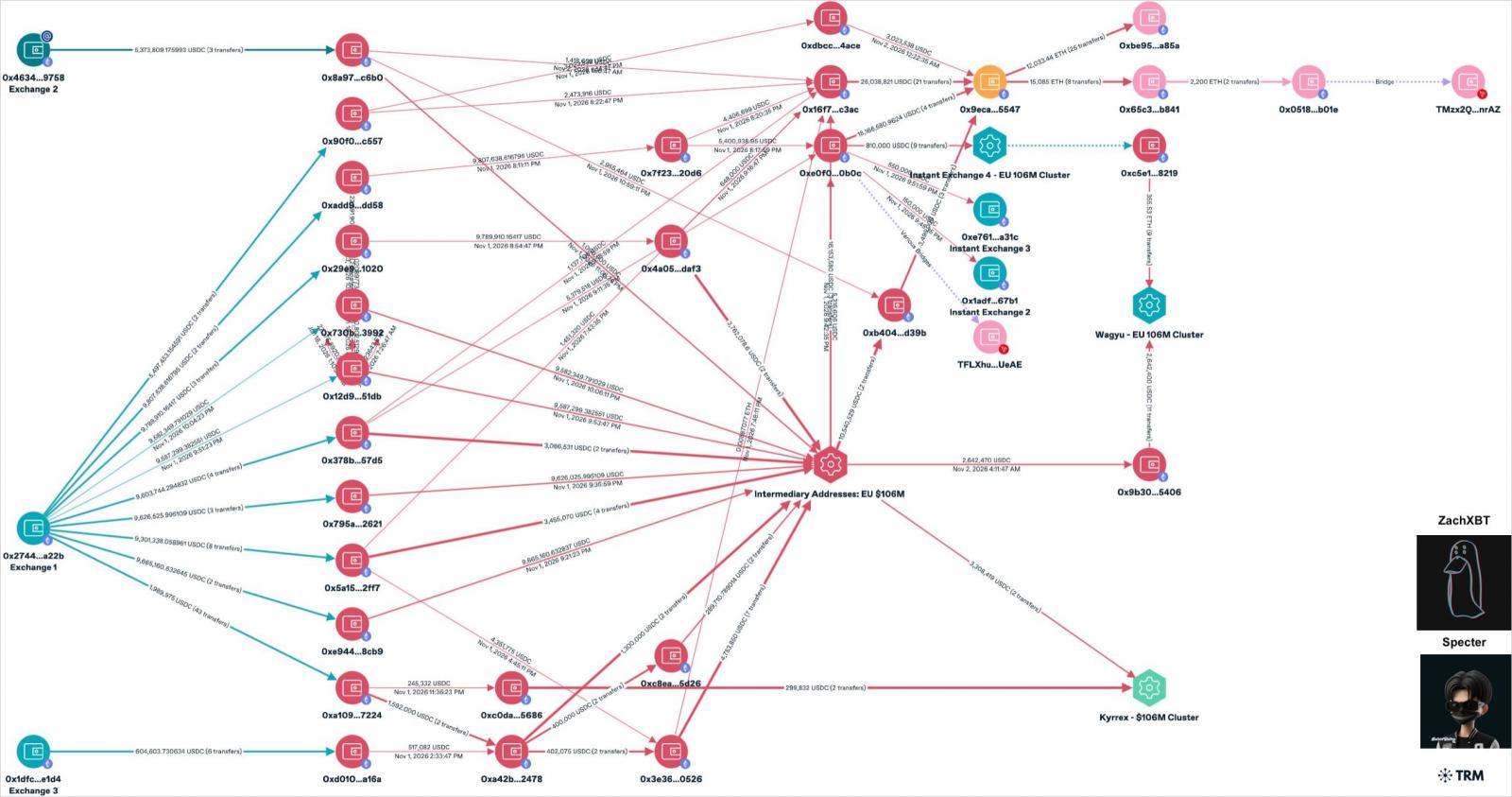
The timeline of the incident began to coalesce in early November 2026. On November 1, blockchain investigator ZachXBT, widely recognized for tracking the movement of stolen digital assets, observed a series of high-volume, unauthorized withdrawals originating from several centralized exchange accounts. The pattern of these transactions suggested a coordinated effort to siphon liquidity into stablecoins, specifically USDC and USDT.
By November 2, these findings reached the public sphere, as ZachXBT issued warnings regarding the large-scale movement of funds. At that time, the victim organization remained unnamed, but the investigator highlighted a critical window of opportunity: the delay in public disclosure had provided the attackers with enough time to launder approximately $30 million of the stolen capital—funds that would have likely been frozen by European law enforcement authorities had the breach been reported immediately.

Crédit Mutuel Arkéa officially acknowledged the security incident on November 4. In a formal statement, the bank characterized the situation as "now closed and under control," noting that operational activities were in the process of returning to standard, secure levels. The bank clarified that the breach did not involve a direct compromise of individual customer accounts, but rather an exploitation of a service provider’s platform, which acted as a gateway into the bank’s internal transaction environment.
Understanding the Attack Vector
In a detailed FAQ document released to its clientele, the bank provided insight into the modus operandi of the attackers. Contrary to initial fears that customer-facing portals were compromised, the bank confirmed that the perpetrators gained entry via a third-party service provider’s platform. This distinction is vital; it highlights the growing trend of "supply chain attacks," where hackers target less-secure vendors to gain lateral access to the primary, high-security target.
Once inside, the attackers did not target the individual savings or checking accounts of the bank’s members. Instead, they compromised the bank’s internal treasury or corporate accounts, using these to initiate legitimate-looking transfers to other banking institutions. Once the funds were transferred out of the Arkéa ecosystem, they were rapidly converted into cryptocurrency. The use of stablecoins—digital assets pegged to the U.S. dollar—allowed the perpetrators to move the value across borders with minimal friction, effectively obfuscating the audit trail for traditional financial regulators.
The bank explicitly ruled out internal human error as the primary cause, favoring the classification of a "sophisticated attack." By targeting the service provider layer, the attackers bypassed traditional firewalls and identity management systems that typically guard the core banking software.
The Scope of Financial Loss
While the bank has declined to confirm the exact $133 million figure cited by external investigators, it has acknowledged that the amount is of a "significant" order of magnitude. The discrepancy between the $133 million estimate and the bank’s vague acknowledgment may be attributed to the ongoing efforts to freeze assets currently held in exchange accounts or intermediary institutions.

For an institution with assets totaling 211.5 billion euros, the loss—while substantial—is not expected to threaten the solvency or the operational viability of Crédit Mutuel Arkéa. However, the reputational cost and the regulatory scrutiny that inevitably follows such an incident are expected to be far-reaching. The French financial regulator, the Autorité de contrôle prudentiel et de résolution (ACPR), is expected to launch a formal review of the bank’s vendor risk management policies.
Regulatory and Security Implications
The Arkéa incident serves as a stark reminder of the "weakest link" theory in cybersecurity. Even if a major bank invests millions in its own cybersecurity perimeter, its reliance on third-party integrations—ranging from cloud service providers to payment processing software—creates an expansive attack surface.
In the wake of the breach, the bank has issued a stern warning to its customers regarding the increased risk of phishing. In scenarios where a bank is known to have been compromised, threat actors often capitalize on the chaos by sending fraudulent communications to customers, masquerading as bank staff or security personnel in an attempt to harvest login credentials or sensitive personal information. Arkéa has advised all clients to exercise extreme caution with unsolicited emails or phone calls and to verify any communication by contacting their designated bank advisor through official, established channels.
Broader Industry Context
This incident is part of a larger, global trend of increased cyber-aggression against the financial sector. As banks continue their digital transformation, moving away from legacy systems and into highly integrated cloud environments, the complexity of these environments often outpaces the development of security protocols.
Blockchain-based theft, as seen in this case, has become the preferred method for modern cyber-criminal organizations. By leveraging the speed of crypto-assets, these groups can move funds across global exchanges before authorities can issue subpoenas or freeze orders. The failure to disclose the breach immediately—which allowed the attackers to successfully launder $30 million—is likely to become a central point of discussion in upcoming European legislative reviews concerning mandatory disclosure timelines for cyber incidents.
Future Outlook and Remediation
Crédit Mutuel Arkéa is currently working in close cooperation with judicial authorities and national police forces to identify the actors behind the attack. Forensic teams are painstakingly tracing the transaction paths to determine whether the funds can be recovered or if they have already been moved into "tumblers" or decentralized finance (DeFi) protocols that effectively anonymize ownership.
For the customers, the bank’s message is one of continuity. The "delay in the execution of certain transfer transactions" mentioned in their statement suggests that the bank implemented a "circuit breaker" protocol, effectively freezing outgoing liquidity to prevent further outflows while they audited their systems.
As the investigation continues, the focus will undoubtedly shift toward the security standards of the service providers connected to the French banking network. The event underscores that for the modern financial institution, security is no longer just about protecting the bank’s own servers, but about ensuring the integrity of the entire ecosystem of vendors and partners.
Moving forward, it is anticipated that Crédit Mutuel Arkéa will overhaul its third-party risk management framework, likely introducing more stringent requirements for vendors, including mandatory real-time monitoring and advanced behavioral analytics to detect anomalous transaction patterns that fall outside of standard operating parameters. This incident, while costly, acts as a definitive signal to the banking industry that the era of perimeter-based security is effectively over, and that a Zero-Trust architecture must be applied not just internally, but to every third-party connection within the digital supply chain.